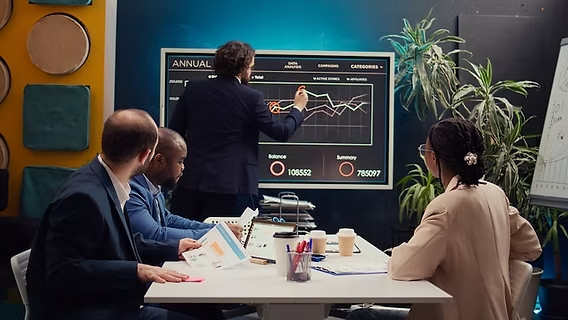

In recent years, many US accounting firms have shifted toward hiring remote accountants to handle bookkeeping, tax preparation support, and back-office accounting work. This model helps firms reduce costs, scale faster, and manage seasonal workload efficiently.
These arrangements are commonly structured as offshore or remote staffing models, where accountants work from countries like Pakistan while supporting US-based CPA firms.
This guide explains how the model works, step by step.
What is a Remote Accounting Model?
A remote accounting model is a structured setup where accountants located outside the United States provide accounting and tax support services to US CPA firms.
These professionals typically work on:
- Bookkeeping
- Financial reporting
- Tax preparation support
- Reconciliations
- Administrative accounting tasks
The US CPA firm remains the final reviewer and signatory authority for all client deliverables.
Why US CPA Firms Use Remote Accountants
1. Cost Efficiency
Hiring remote accountants significantly reduces overhead costs compared to in-house staff.
2. Scalability During Tax Season
Firms can quickly expand capacity during peak seasons without long-term hiring commitments.
3. Access to Skilled Talent
Remote teams often include experienced accountants familiar with:
- US accounting standards
- Tax workflows
- Software systems used in US firms
4. Focus on High-Value Work
CPAs can focus on advisory, client relationships, and review work while remote teams handle execution tasks.
How the Remote Accounting Workflow Works
Step 1: Client Onboarding by CPA Firm
The CPA firm collects client documents and defines scope of work.
Step 2: Task Allocation to Remote Team
Work is assigned to remote accountants based on skill level:
- Bookkeepers handle daily transactions
- Staff accountants handle reconciliations and reports
- Tax preparers assist with return preparation
Step 3: Execution Using Accounting Software
Remote teams work on tools commonly used by US firms, such as:
- QuickBooks
- Xero
- Zoho Books
- Tax preparation software (firm-dependent)
- Practice management tools like Karbon or Canopy
Step 4: Quality Review
All work is reviewed internally before submission to the CPA firm.
Step 5: CPA Review and Final Approval
The US CPA firm:
- Reviews financials or tax returns
- Makes corrections if needed
- Finalizes and signs documents
Common Roles in Remote Accounting Teams
1. Remote Bookkeeper
- Records transactions
- Maintains ledgers
- Bank reconciliation
2. Staff Accountant
- Financial statements
- Month-end closing
- Adjusting entries
3. Tax Preparer Support
- Tax return preparation assistance
- Data entry for tax forms
- Supporting schedules
4. CAS Support Associate
- Client accounting services
- Ongoing bookkeeping and reporting
5. Administrative Accounting Support
- Document management
- Client communication support
- Workflow coordination
Security and Compliance in Remote Accounting
US CPA firms require strict controls to protect client data. Standard practices include:
- NDA (Non-Disclosure Agreements)
- Multi-factor authentication (MFA)
- Role-based access control
- Encrypted cloud storage
- Secure file sharing systems
- Activity tracking and audit logs
These ensure confidentiality and data protection.
Key Principle: CPA Firm Retains Responsibility
A critical rule in this model is:
The US CPA firm always retains final responsibility, client relationship ownership, and signing authority.
Remote accountants provide support services only, not final tax or audit opinions.
Benefits of the Remote Model for CPA Firms
- Lower operational costs
- Faster turnaround times
- Flexible staffing during peak seasons
- Improved productivity
- Ability to serve more clients
Challenges to Manage
- Time zone coordination
- Communication gaps
- Training consistency
- Data security compliance
- Quality control processes
These are managed through structured workflows and supervision.
Why This Model is Growing Fast
The accounting industry is shifting toward global collaboration. Remote staffing allows CPA firms to stay competitive while maintaining service quality and efficiency.
Countries like Pakistan have become strong talent sources due to:
- Accounting education background
- Software familiarity
- Cost efficiency
- English communication capability
Final Thoughts
The remote accounting model is no longer experimental—it is now a mainstream operational strategy for US CPA firms. When structured properly, it creates a win-win system for both firms and remote professionals.